
Best Practices for Buying Cheap Printing Online
When shopping for cheap printing online, it’s tempting to focus on price alone. After all, everyone loves a great deal. But when it comes to printed materials—whether flyers, manuals, catalogs, or postcards—quality, reliability, and turnaround time can make the difference between a successful project and a disappointing result. Here are the most important factors to consider before placing an order with any online printing company.
1. Compare Price and Value, Not Just Cost
The cheapest price doesn’t always mean the best deal. Some printing companies cut costs by using lower-quality paper or outdated equipment, which can result in dull colors or thin, fragile prints. When comparing prices, check what’s actually included in the quote—paper type, color printing, finishing, and shipping costs can all affect the total. Look for companies that clearly list their paper weights (like 24lb bond or 100lb cover). The best value is usually a balance between affordability and professional-grade results.
2. Check the Company’s Reputation
Before ordering, take a few minutes to read customer reviews. Look for patterns in the feedback—do customers mention fast turnaround, accurate colors, and consistent quality? Or do they complain about delays and poor customer service? Avoid companies with vague websites, no address or phone number, or unclear policies on reprints and refunds.
3. Understand Turnaround and Delivery Times
Some companies can take days to print your order before it is even shipped or even worse charge considerably more. This can dramatically extend the time it takes before you have your order in hand and at the same time increase the cost. Check the production times as many reputable printers clearly show production times on their website and whether or not the charge for faster production.
Don’t forget to also consider the shipping times as shipping may take many days depending on your location. This is especially important for time-sensitive materials. Choose a faster shipping method if needed.
4. Review File and Proofing Requirements
Online printing depends on the quality of your uploaded files. Always prepare your PDF with high-resolution images, embedded fonts and make sure it is at least 300dpi resolution. Review your layout carefully before sending it to print — this simple step can prevent costly mistakes and save valuable time.
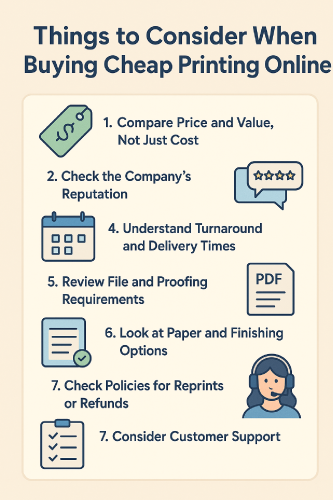
5. Look at Paper and Finishing Options
Paper weight, finish, and binding can dramatically change the look and feel of your project. For example, gloss paper gives photos vibrant color, while matte paper offers a professional, non-reflective finish. If you’re printing booklets, catalogs, or manuals, check for binding options such as saddle stitch, coil, or comb binding. Companies that provide multiple options usually invest in better equipment and care more about the final product.
6. Check Policies for Reprints or Refunds
Even the best printers can make mistakes. Make sure the company has a clear policy for handling damaged or incorrect orders. Reputable printers typically require claims to be filed within a certain number of days after delivery—often 30 days. This shows they stand behind their work and value customer satisfaction.
7. Consider Customer Support
Good customer service can save you from frustration. Look for printers that offer phone support, or prompt email responses. If you’re printing something complex, such as a catalog with multiple paper types or a booklet with binding, being able to speak to someone knowledgeable can make the process much smoother.
Final Thoughts
Buying cheap printing online can be a smart and cost-effective choice when done right. The key is to balance price, quality, speed, and support. Choose a company that invests in quality materials, provides fast turnaround, communicates clearly, and values its customers. That’s how you get professional results at a low cost—and real value for every dollar spent.
